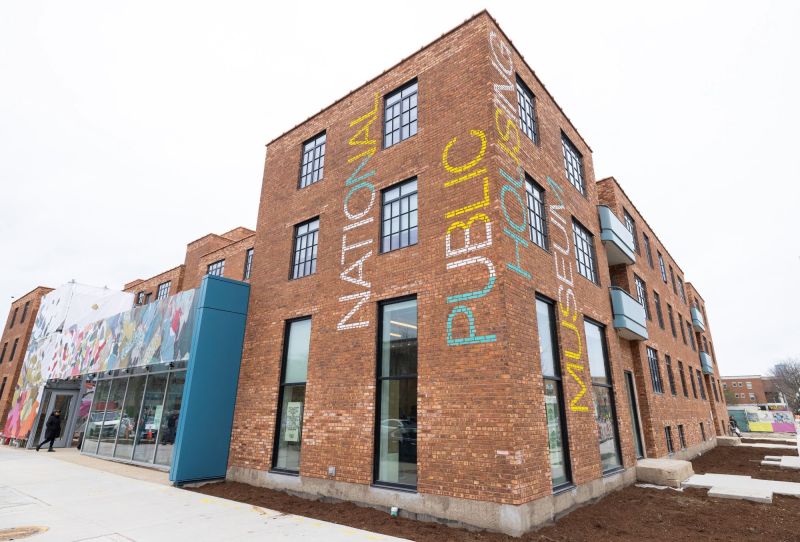
In a city with a deep history in public housing, a groundbreaking institution has opened its doors.
The new National Public Housing Museum in Chicago features exhibits rooted in personal objects and stories from people who call public housing home, art installations, and programmatic and advocacy spaces that explore solutions to the nation’s housing crisis.
Located in the last remaining building of the Jane Addams Homes public housing complex, the site is also home to 15 mixed-income apartments through a partnership with the Chicago Housing Authority and Related Midwest.
Lisa Yun Lee, executive director of the museum, shares the story of the museum and why it’s relevant today.
Why is the National Public Housing Museum important?
The National Public Housing Museum is the only cultural institution in the United States dedicated to preserving and interpreting the history of public housing. More than 10 million people have lived in public housing over the last century, yet their stories are often erased or stigmatized. This museum centers those voices and stories, revealing the complexity, dignity, and resilience of public housing residents while shedding light on the policies that shaped—and continue to shape—housing in America. By combining art, storytelling, and policy, the museum is a powerful space for housing justice and a place to imagine a future where housing is a human right.
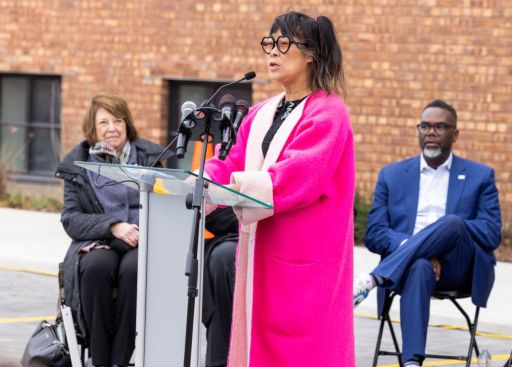
Barry Brecheisen
Lisa Yun Lee, executive director, speaks at the opening of the National Public Housing Museum.
What exhibit or program are you most excited about?
It’s hard to choose just one, but our recreated historic apartments are immersive spaces that allow visitors to literally walk through the homes of residents from different eras—a Jewish family in the 1930s, a 1950s apartment that explores how redlining and segregation shaped demographics of cities and public housing, featuring the scholarship and voice of Dr. Keeanga-Yamahtta Taylor alongside the enthralling multimedia work of Emmy Award-winning collective Manual Cineme; and an early 1960s apartment that offers a window into the larger historical, social, and cultural landscape of African-American history and of public housing in Chicago and nationally. Each apartment is anchored in real oral histories and brought to life through sound, objects, and even humor—thanks to contributors like poet Nate Marshall and actor Lil Rey Howery. These spaces are moving, educational, and unforgettable.
Tell us about the unique space where the museum is located:
The museum is located in the last remaining building of the historic Jane Addams Homes, one of Chicago’s first public housing developments, originally opened in 1938. Saved from demolition by resident activism, the building has been lovingly restored and adaptively reused as a museum and community space. Located on Chicago’s Near West Side, the museum spans 8,500 square feet of indoor exhibition space, 3,000 square feet of programmatic space, and 4,500 square feet of outdoor sculpture garden. The building itself is our largest artifact—and one of our most powerful storytellers.
What was the biggest challenge of developing the museum, and how did you overcome it?
The biggest challenge? Changing the mainstream narrative and stereotypes of public housing. Residents like [former housing commissioner] Deverra Beverly envisioned a place that would amplify the stories of residents through their own voices. We built the broadest coalition imaginable of scholars, housing advocates, activists, urban planners, architects, and preservationists. Together, we fought to save the building and gather oral histories that became the foundation for everything we do. Turning a vacant, neglected public housing building into a world-class museum required years of organizing, fundraising, policy advocacy, and careful preservation. We overcame those hurdles by staying rooted in community partnerships and the unwavering belief that these stories matter. The journey was long, but it’s a testament to resident leadership and collective determination.
Supporters have been working on the museum for several years. How did plans for the museum evolve over the years?
The original dream was to create a space that would honor the history of public housing and its residents. That vision hasn’t changed—but it has expanded. Over time, we’ve grown into a museum that doesn’t just preserve history but also propels advocacy, arts, and economic empowerment. We now have programs like the Artist as Instigator residency, a cultural workforce development initiative, and a resident-owned cooperative store. We’ve also incorporated housing into the building itself, which now has 15 units of affordable housing in the back of our building, so the site remains what it always was: a place people call home.
What do you hope people gain from visiting the museum?
I hope visitors leave with a more nuanced understanding of public housing—not as a failed experiment and a narrative that is filled with misconceptions and stereotypes but as a reflection of our country’s values, struggles, and possibilities. There are stories of collective joy, innovative entrepreneurship, and commitment to family and friends that we can all learn from. I want people to feel empathy and to be inspired to take action. Whether it’s learning about federal housing policy, hearing a resident’s story, or sitting on a “stoop” covered in fabric from someone’s apartment, the museum invites everyone to imagine a more just, equitable, and inclusive future.