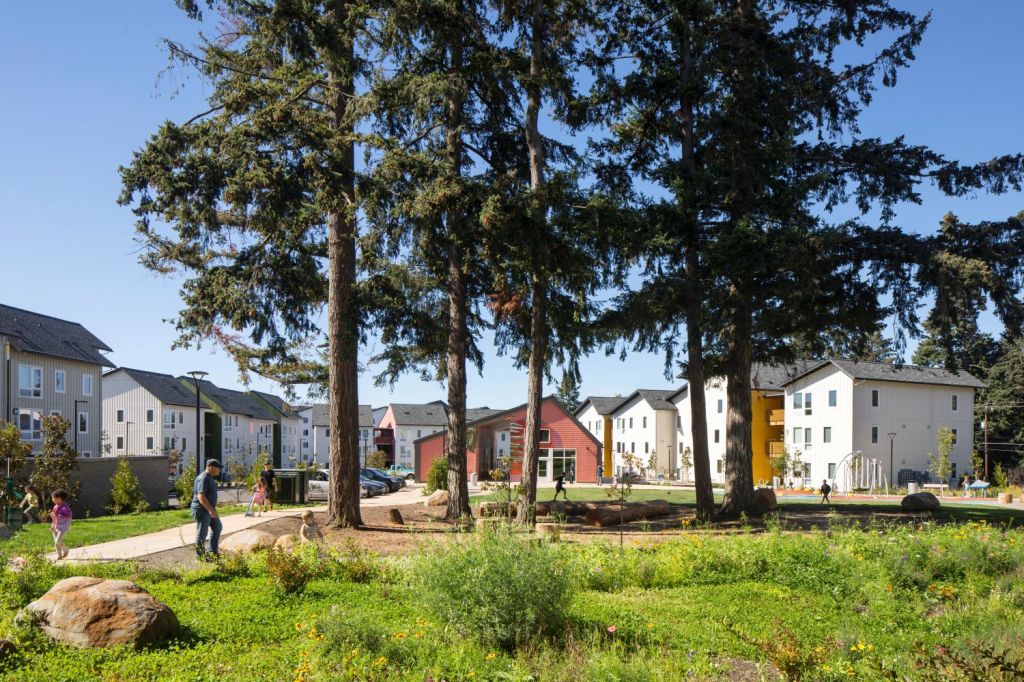
Farmworkers, veterans, and people with disabilities make their home at Las Flores in Oregon City, Oregon.
PROJECT DETAILS
DEVELOPERS: Community Development Partners and Hacienda Community Development Corp.
ARCHITECTS: Salazar Architects and PLACE (landscape architect)
GENERAL CONTRACTOR: LMC Construction
MAJOR FUNDERS: Metro; Clackamas County Housing Authority; Oregon Housing and Community Services; Citi Community Capital; U.S. Bancorp Impact Finance; Aegon
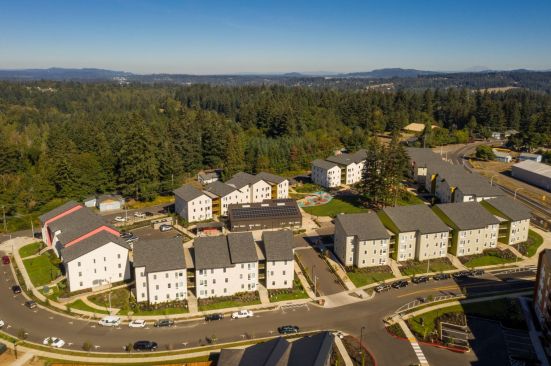
The 171-unit development consists of eight buildings and offers a variety of floor plans—42 one-, 54 two-, 66 three-, and nine four-bedroom apartments—to accommodate larger families.
Las Flores serves residents earning between 30% and 60% of the area median income. In addition to 70 units that are supported by project-based vouchers, there are nine permanent supportive housing and eight Veterans Affairs Supportive Housing units. With assistance from a special state tax credit, 12 apartments are set aside for agricultural workers and their families, who are often priced out of housing in the area.
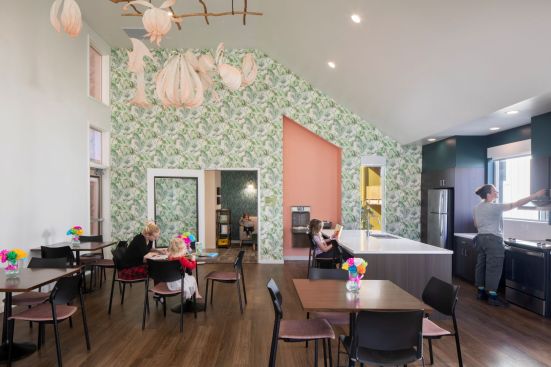
Co-developed by Community Development Partners and Hacienda Community Development Corp. (CDC), Las Flores aims to foster connection and stability. It emphasizes communal gathering spaces and robust resident services to support a thriving community. At the heart of the development is La Casa Rosa, an on-site community hub that enhances opportunities for education, engagement, and personal growth.

Lara Swimmer, Esto
“We at Hacienda CDC strongly believe housing is not enough,” says CEO Ernesto Fonseca. “If housing is not enough, what is it missing? We believe education for lower-income people is one of the most successful tools for them to advance and prosper. We provide after-school programs for teenagers and young kids to support them with homework and enrichment activities.”
There are also programs for families and older residents, according to Fonseca.
“When you come to Las Flores, you won’t see affordable housing,” he says. “You will see a village of community spaces where people can gather.” Financing for the $74.1 million development includes 4% low-income housing tax credits and funding from a 2018 voter-approved affordable housing bond.